Water Purification System
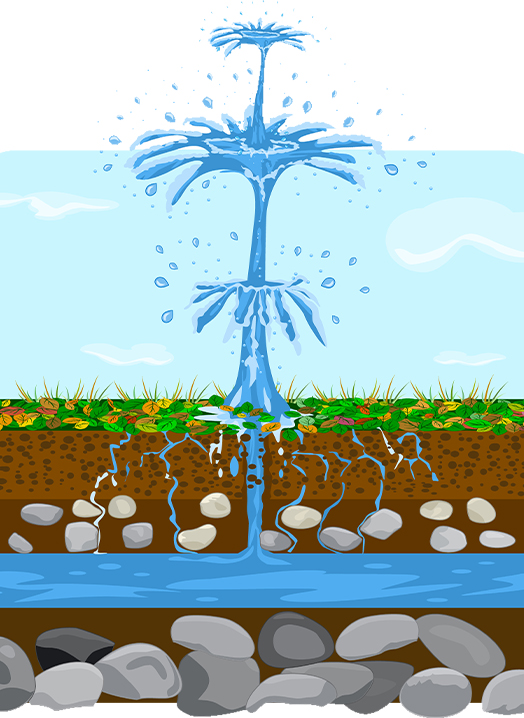
Create a model of an aquifer, demonstrate how these geological formations act as natural water filters, and discover how they are refilled with clean water!
Fun Facts/Information:
- Areas that store groundwater for wells are known as aquifers, which are underground layers of porous rock or sediment (such as sand, gravel, or fractured rock) that hold and transmit water. The (top)upper surface of this saturated zone is the water table.
- Prime locations for good aquifers include valleys, draws, or areas with fractured bedrock, as these geological features efficiently capture and hold water.
- Wells are drilled into these aquifers to access the water, which is replenished by precipitation seeping down through the soiI.
Learning Objectives:
- Students will create a water filter system using resources found in nature.
Materials:
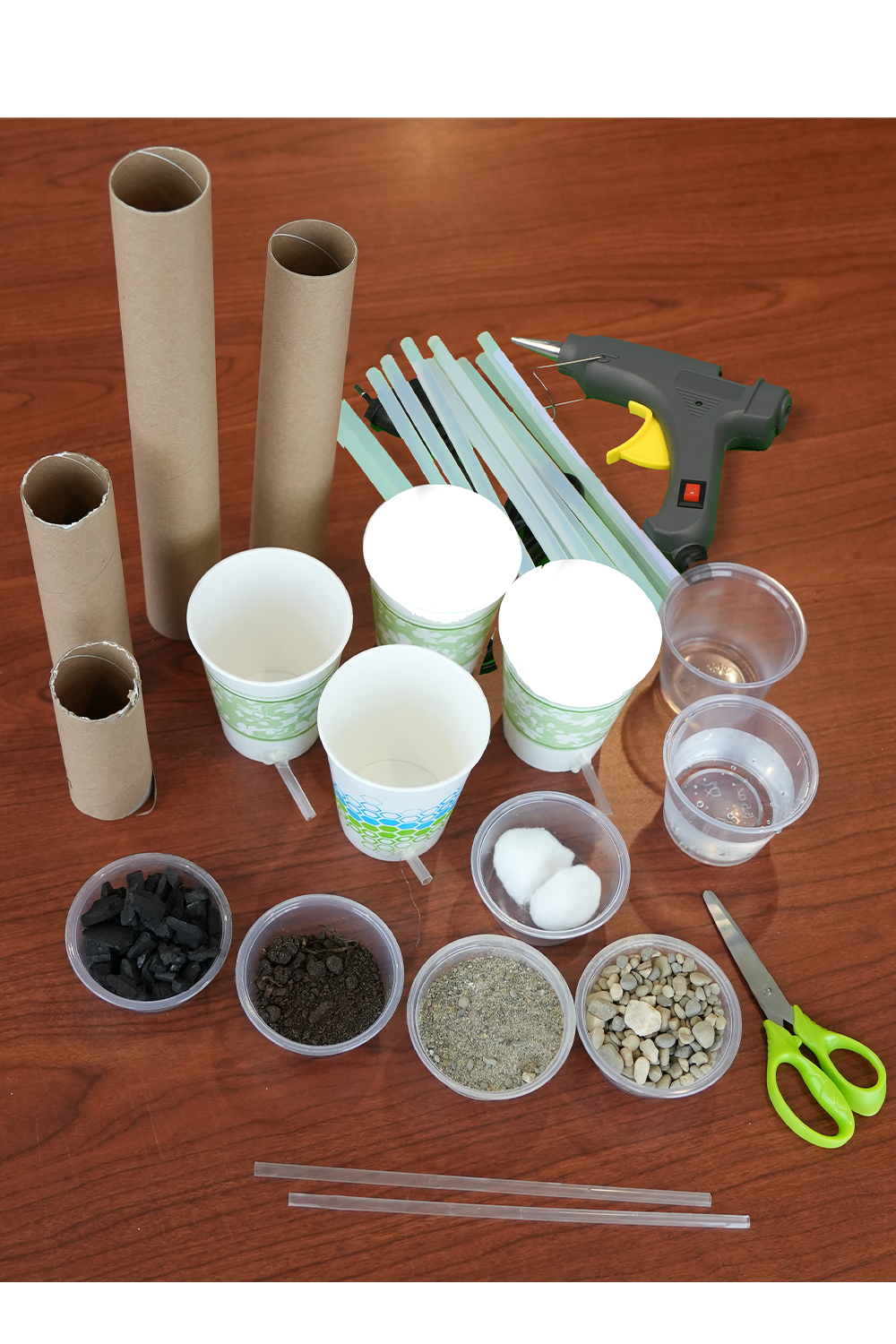
- Two paper towel tubes
- 2 cotton balIs
- 2 clear straws
- Scissors
- Glue sticks*
- Hot glue gun*
- 1 or 2 oz. topsoiI
- 6 oz. tap water
- 4 small (1 oz.) paper cups
- 2 oz. charcoal (optional)
- 2 oz. sand
- 2 (4 oz.) plastic cups
Safety Considerations:
- Glue gun/glue sticks can cause burns and/or be a fire hazard when used incorrectly. Adult supervision/assistance is advised based on student's age and/or abilities.
- Materials are not for consumption.
- Prepare the cups
- Cut a small hole near the bottom side of each paper cup.
- Insert a straw into each hole. You may need to widen the hole some, but avoid making it too large.
- Trim each straw so that it extends about 2 inches from the cup.
- Seal the Openings
- Secure the straw in place using a glue stick and hot glue gun to prevent leaks around the hole.
- If using clay, wrap it tightly around the straw and hole to seal any gaps.
- Build the Filter Structure
- Cut the paper towel rolls into different lengths to create a staircase formation.
- Position the paper cups on top of the rolls so that:
- The end of each straw sits just above the rim of the next cup.
- The straw from one cup aligns with the center of the next cup below it.
- Ensure each paper cup fits securely on its paper towel roll.
- Layer the Filter Materials
- Pour soil into the first paper cup (on the tallest paper towel roll).
- Add charcoal (optional) into the second cup.
- Place gravel or pea stones into the third cup.
- Add cotton balls to the bottom of the fourth and final paper cup.
- Set Up the Collection Cup
- Place a clear plastic cup underneath the last paper towel roll (the one with cotton balls).
- Check that all straws are lined up and centered above the next cup.
- Test the Filtration System
- In a separate plastic cup, mix 1 ounce of topsoil with tap water (do not fill to the top). Stir with a plastic spoon to create "dirty water."
- Pour this "dirty water" mixture into the top cup containing gravel.
Discussion Questions:
- How clean was your water during the first trial?
- Do you think running the water that was collected at the end would be cleaner if you ran it through again?
- What was the most difficult thing about this activity?
- What other materials found in nature could be used for this natural water purification system?
Quick Links

Where are Activities Available?
We partner with over 600 educational organizations.
See our school locator