Candy pH
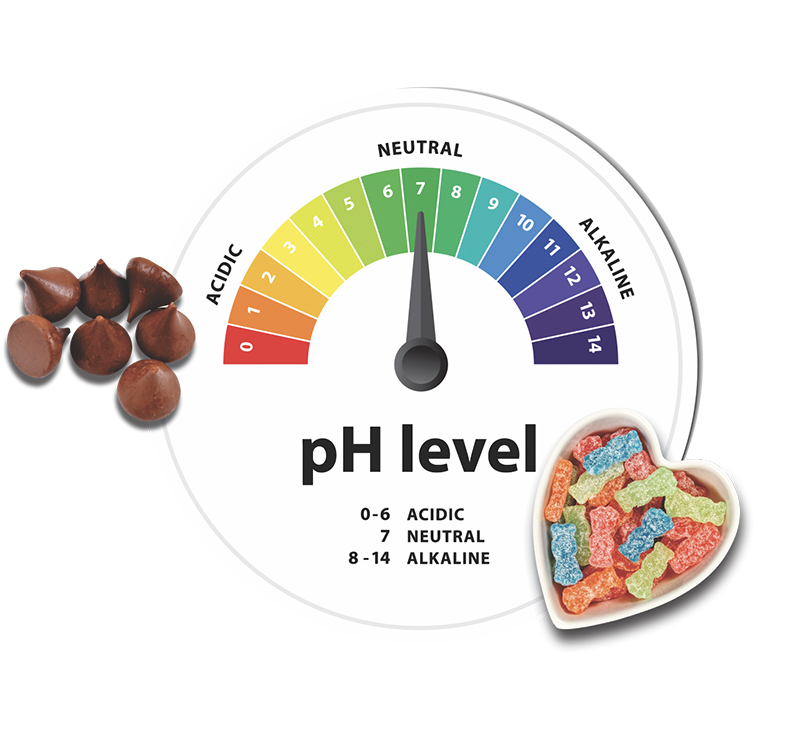 This is the perfect experiment to use up your leftover Halloween candy, especially those sour candies that make your mouth pucker. With baking soda and water, we will explore the acidity of your leftover sweet treats.
Fun Facts/Information:
- Sour candies contain high amounts of sugar, which can provide energy and relieve stress by releasing endorphins ("feel-good" chemicals in the brain).
- The tongue has special cells called taste receptors that detect sour flavors.
- Scientists use the pH scale to measure the strength of the acid contained in substances (acidity). More acidic substances score lower on the pH scale.
Learning Objectives:
- Students will discover which candies contain acid with an acid-base reaction experiment.
Materials:
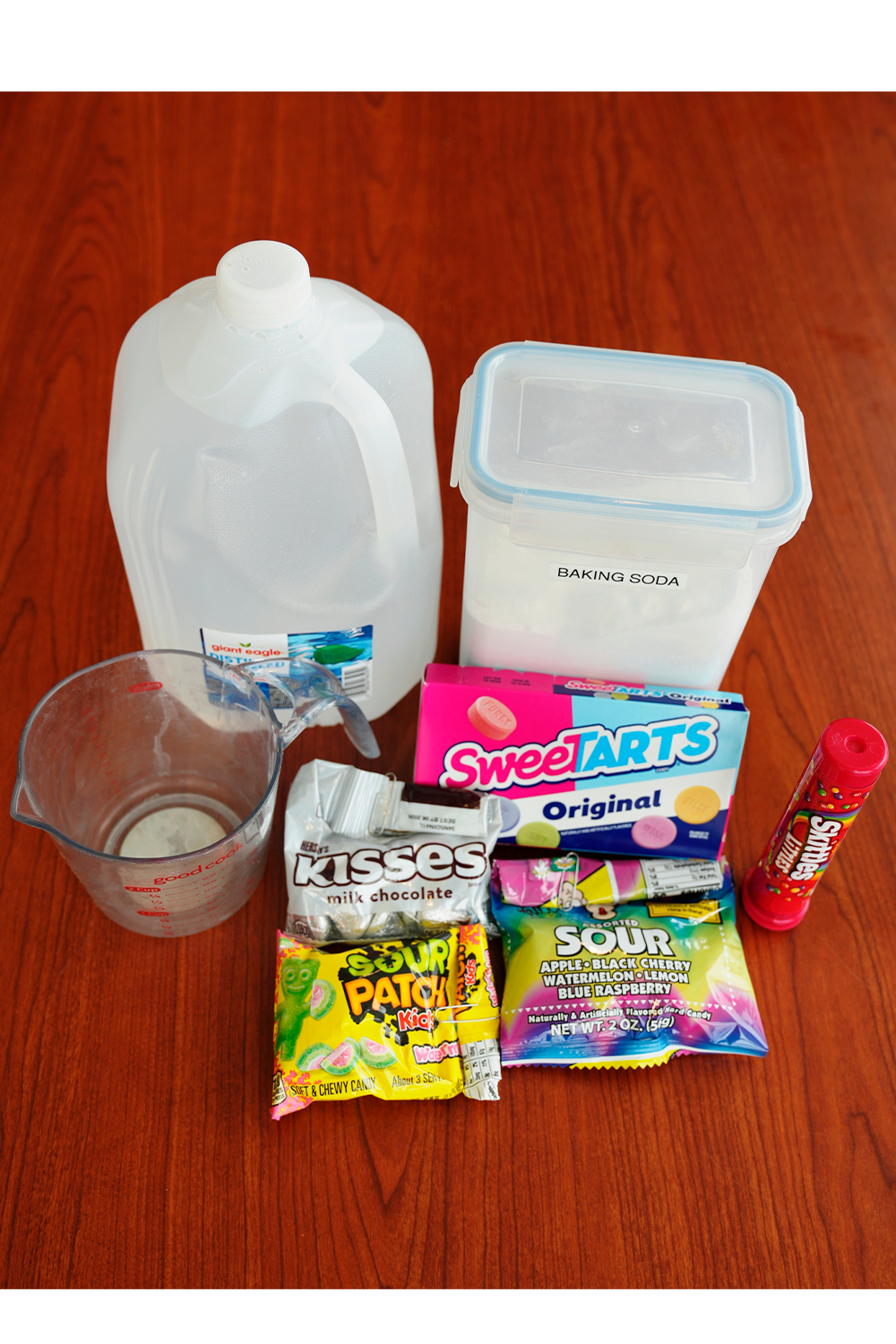
- Choose 4 types of candy from the list below:
- Sour candies (Sour Patch Kids, Lemon Heads, Warheads, etc.)
- Sweet candies (Skittles, Candy Corn or Candy Pumpkins, etc.)
- Chocolate candies (M&Ms, Hershey's Kisses, etc.)
- 4 Plastic cups
- Distilled water
- Measuring cup
- Baking soda
Safety Considerations:
- If any candies need to be crushed to dissolve more quickly, ask an adult for help. Use a kitchen tool, such as the bottom of a spoon or ice cream scoop, to crush them.
Procedure:
- Candy taste testTaste each candy. Discuss: Which do you like best? Which is the most sour? Why do you think that?
- Prepare the experiment
- Pour 1/4 cup of distilled water into the plastic cups.
- Place one of each type of candy in each cup.
- Each candy will need to dissolve completely. You can crush the candies that are taking too long.
- Watch them bubble
- After each candy has completely dissolved, add 1 tsp. of baking soda to each cup.
- Observe what happened in each cup.
Discussion Questions:
- Which candy had the most bubbles?
- Which candies do you think contain acid? Why?
- Why do you think the bubbles formed?
- Answer: Bubbles form when there is acid in the candy. More bubbles = more acid.
- Think back to the beginning of the procedure. How did the candies with the most bubbles taste?
Extensions:
- At the beginning of the procedure, after tasting each candy, rank them from most to least sour.
- Try steps 5-9 again. This time, add more baking soda. What happened this time? Were there more bubbles?
- Try the experiment again with other candies. You could try with all sour candies and observe which are most acidic.
Quick Links

Where are Activities Available?
We partner with over 600 educational organizations.
See our school locator