Breathing Bugs
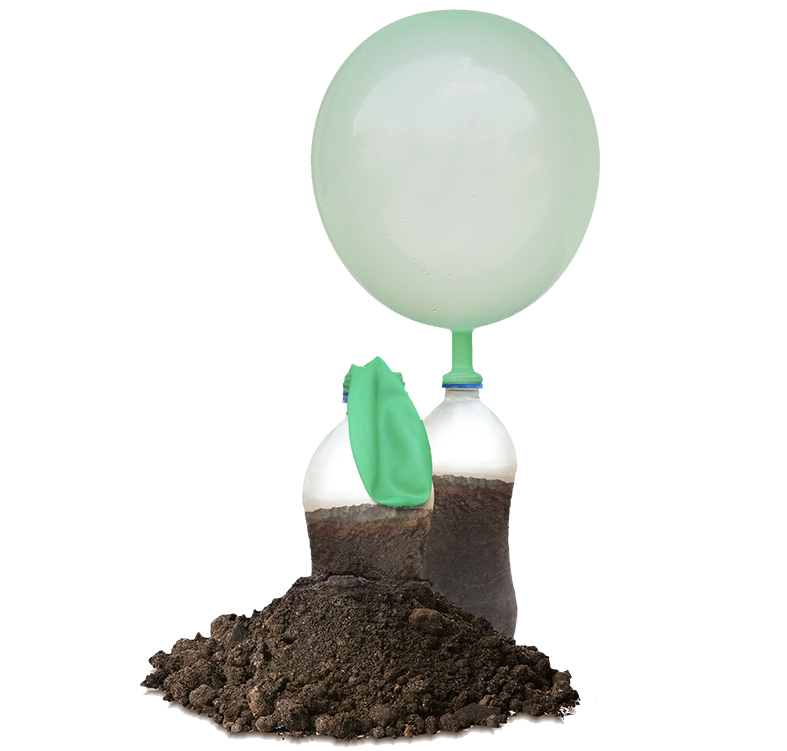
Soil is full of tiny, microscopic living things called microbes that keep our planet healthy. In this activity, we'll see how soil "breathes" by watching a balloon fill up as these tiny helpers release gas.
Fun Facts/Information:
- SoiI microbes munch on old plants and other leftovers from nature, turning them into food for new plants. When they eat, they also breathe out a gas called carbon dioxide (Co2).
- A handful of soil contains more microbes than there are people on earth!
- Some microbes are used to create foods Iike yogurt, pickles, cheese, and bread.
- Microbes have been on Earth for billions of years - long before dinosaurs.
- Here at ALCOSAN, we also use microbes (that we call "bugs") to help us clean dirty water!
Learning Objectives:
- Students will recognize that soil contains microscopic life that keeps our planet healthy.
- Students will observe evidence of microbe respiration by watching a baIloon fill with gas.
Materials:
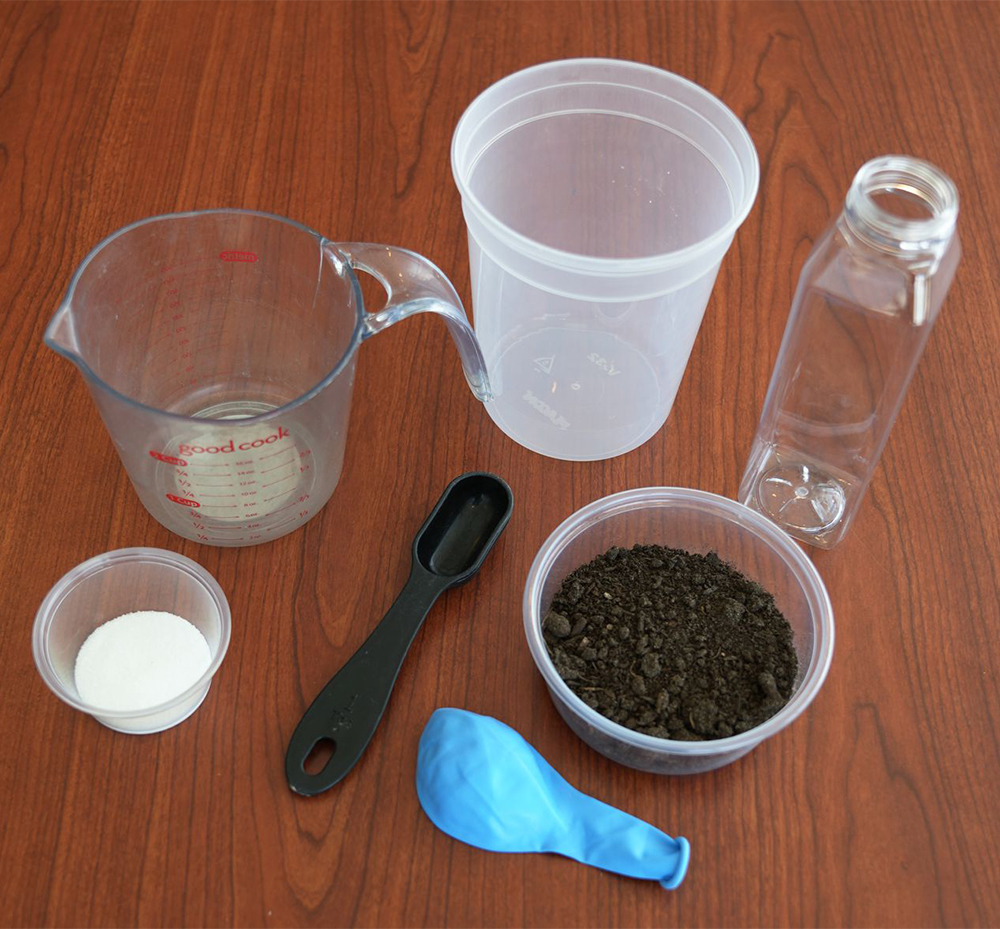
- 1 Clear plastic or glass bottle (about 16 oz.)
- 1 Small balloon (about 6 inches)
- SoiI (from your yard, garden, or park)
- Sugar
- Water
- Measuring spoon and cup
- 2 oz. gravel
Safety Considerations:
- Make sure to wash your hands after touching the soil. Some microbes can make you sick!
- Do not eat or taste any of the materials (soil, sugar water, flour, etc.)
- Dispose of soil and water properly after the experiment. The soil should go outside or into the trash, not down the sink! Recycle the bottles if possible.
Procedure:
- Fill the bottle about 3/4 full with soil.
- Mix 1 tablespoon of sugar in about 1/2 cup of water until dissolved. In this experiment, the sugar will work as "food" for the microbes!
- Slowly pour the sugar water into the soil until it feels moist, but not muddy.
- Stretch a small balloon over the mouth of the bottle. Make sure air is not entering or escaping the bottle.
- Place the bottle in a warm spot (from 68°F to 86°F).
- Record your observations every 2 days for the first two weeks, then weekly after.
Discussion Questions:
- Did the balloon grow? What does that tell us about the microbes in the soil?
- How do microbes help keep our soil, plants, and water healthy?
- Based on this experiment, what are two things that microbes need to survive? How is that similar to humans?
- Remember: why does ALCOSAN use microbes?
Extensions:
Now that you've seen what happens with sugar water, try changing one thing at a time to see how it affects the balloon:
- Different Foods: Try adding vegetable scraps or leaves. Do microbes like some foods better than others?
- Different Soils: Use soil from a garden, playground, or forest. Which soil "breathes" the most?
- Water Only: What happens if you just add water instead of sugar water?
- Temperature: Place one bottle in a warm spot, and another in a cool spot. Does temperature change how fast the balloon grows?
- Amount of Sugar: Double the sugar in one bottle. Does more food make a bigger balloon? Did the balloon grow? What does that tell us about the microbes in the soil?
Quick Links

Where are Activities Available?
We partner with over 600 educational organizations.
See our school locator