DIY Sundial
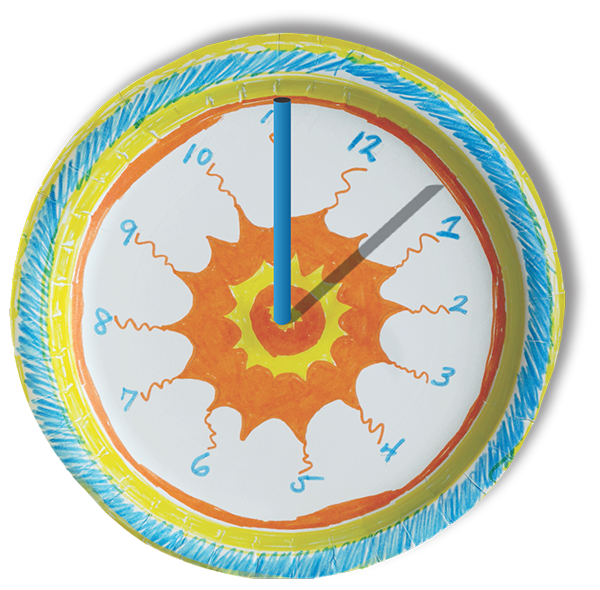 Have you ever noticed your shadow changing as the day goes on? In this exciting DIY sundial STEM activity, you'll discover how the Sun and Earth's rotation work together to create moving shadows that have helped people tell time for thousands of years. Build your own sundial, head outside, and watch science happen right before your eyes as you explore sunlight, shadows, and the fascinating world of outdoor discovery.
- The Sun appears to move across the sky because of Earth's rotation.
- A shadow is created when an object blocks light.
- Ancient civilizations used sundials to tell time long before clocks were invented. This method is known as solar time.
- The part of a sundial that casts the shadow is called a gnomon (usually a stick or pointer).
Learning Objectives:
- Students will model how the Sun's position affects shadows and use observations to measure the passage of time.
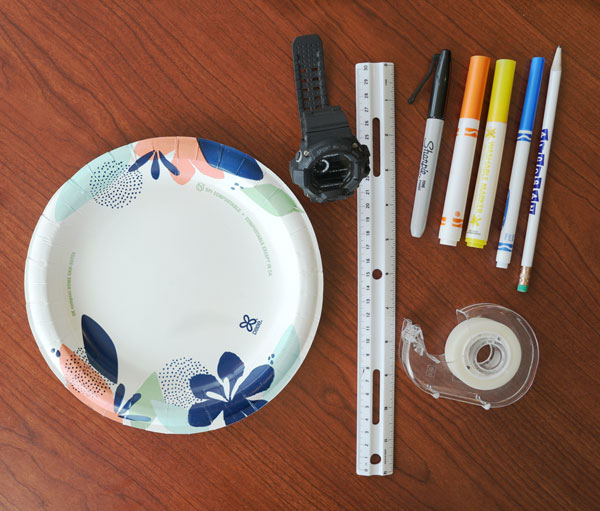
Materials:
- Paper plate or cardboard circle
- PenciI or straw
- Modeling clay or tape
- Marker
- Ruler
- Clock or watch
Safety Considerations:
- Adult supervision is recommended when working outdoors.
- Avoid looking directly at the Sun.
- Use sunscreen if spending extended time outside.
Procedure:
1. Create your sundial.
- Push a pencil or straw through the center of your paper plate.
- Use clay or tape to secure it so it stands upright (this is your gnomon).
- Write "12" at the top edge of the plate.
2. Set up your sundial.
- Take your sundial outside to a sunny spot.
- Place it on a flat surface.
3. Track the shadows.
- Look at the shadow made by your pencil.
- Use a marker to trace where the shadow falls.
- Label the shadow with the current time using a clock or watch.
- Repeat this process at different times throughout the day (every hour if possible).
4. Observe your results
- Watch how the shadow moves over time.
- Notice how the length and direction of the shadow changes.
Discussion Questions
- Make observations about the shadow throughout the day. How did its position change?
- Was your sundial accurate at every time of day? Why or why not?
What might affect how well your sundial works (clouds, location)
Extensions:
- Shadow Tracking Challenge
• Track your sundial over multiple days and compare results. Do the shadows follow the same pattern? - Human Sundial
• Stand outside and trace your own shadow at different times of day to compare with your sundial.
Quick Links

Where are Activities Available?
We partner with over 600 educational organizations.
See our school locator